Thursday, January 2, 2020

2020年 年賀状 2020 New Year's Card


2020年 年賀状


2020 New Year's Card

2020220
What do the above numbers mean? They are the combination of numbers of  this year ( 2020) and my birthday (February 20). I will be 77 years old this February. I am as fine as an average 76-year-old man. I am reading and writing English and Japanese short stories. This is the 29th year since I began practicing Japanese martial arts of Jodo (a stick as a weapon). I make it a rule to walk more than 5,000 steps. I cannot walk 10,000 steps. I have my own blog called “MAT’s EYE.” Please google it.

Wishing you health and happiness!

mail address: mhiroshi62@yahoo.co.jp

Tuesday, December 31, 2019

電車に手を振る坊や A Little Boy Waving His Arms at a Train

電車に手を振る坊や


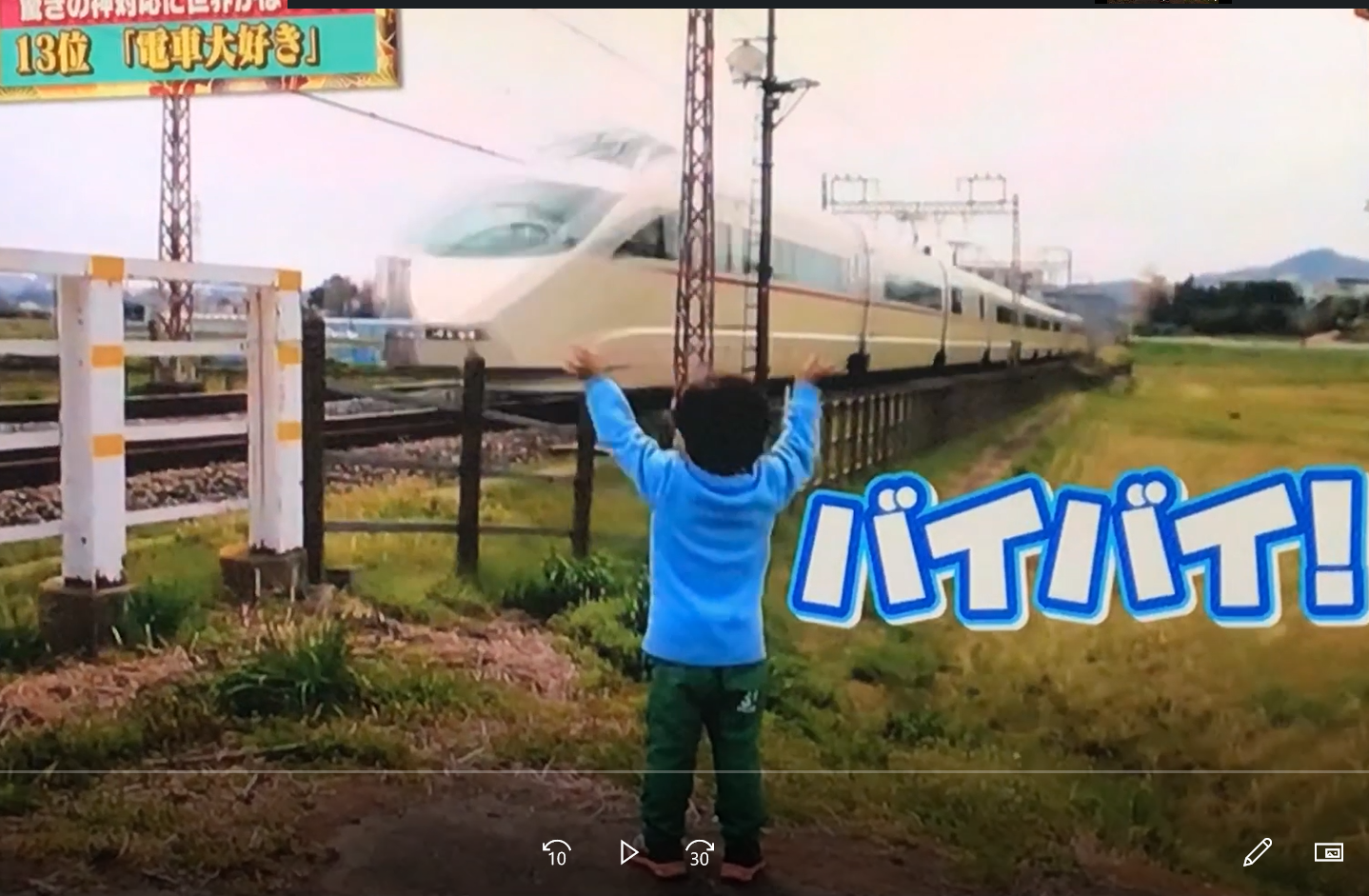
テレビの「クールジャパン」という番組で、ほろっとさせられる動画を見た。5歳ぐらいの少年が線路わきに立って、近づいてくる電車に両手を大きく振っていると、電車が少年のそばを通過する瞬間に警笛とか、電車によってはミュージックホーンを鳴らしていく。少年は「やったぁ!」と喜ぶ動画だ。少年は遥か遠くから近づいてくる小さな小さな電車に大きく両手を振っている。
番組によると、少年は三歳のときから同じ線路わきに立って手を振っていた(写真参照)。その坊やを父親が撮影したものだ。また、運転手さんたちは少年に気がついており、職場でも運転手仲間が少年のことを話題にしているとか。彼らは少年から力をもらっているとのこと。坊やが一生懸命に両手を振っている熱意に運転手さんも警笛で応えたのだ。
いい話ではないか。

A Little Boy Waving His Arms at a Train

I watched a heart-warming video during a TV program “Cool Japan” the other day. About a five-year-old boy standing near a railway track is waving his arms hard at an approaching train. The moment the train passes by him, it sounds a horn or music melody (depending on the train type) for him. Hearing the sound, he shouts with delight, “Hooray!” The boy starts waving his arms enthusiastically when he sees a  tiny tiny train far in the distance.
   According to the program, the boy began to wave at the trains three years ago when he was three years old (see photo). His father videotaped him. The train drivers are aware of him and sometimes talk about him when they get together in the station they work for. They say he gives source of energy to them. They respond to the boy’s enthusiastic waving by sounding horns.
What a nice episode!


Tuesday, December 24, 2019

歩くゴミ箱 A Walking Garbage Box

歩くゴミ箱


ある新聞の投書欄に次のような投書が載った。(要旨のみ)

私は80歳の老人であるが、近所の遊歩道や公園をウオーキングするときにトングをもって空き缶や弁当の空箱を拾っている。この9年間やっている。ところが、通りすがりの人やベンチに座っている人が、私を歩くゴミ箱扱いして、「おじさん、ほら、そこにゴミ」とか「お父さん、そこにもあるわよ」と指図がましいことを言う。彼らはなぜ自分でゴミを拾ってゴミ箱に捨てずに、人に指図するのか。私は自主的にゴミを拾っているのに、「ゴミを拾うのはあんたの役目でしょ」と言わんばかりだ。私は「自分でやったらどうや。失礼と思わんか」と言ってやる。最近はこういう得手勝手な人が多い。腹が立つ。

 私もこの投書を読んで腹が立った。最近の若者は老人に席を譲らない。韓国に行ったとき、私と女房がバスに乗ると、座っていた二人の若者が即座に起立し、席を譲ってくれた。そういえば、つい先日も私が地下鉄の老人席に座っていると(私は白髪の後期高齢者)、杖を突いた老女が乗ってきて私の前に立った。電車が動くと、よろけないように杖で体を支えている。老人席に座っていた若者(複数)が誰も席を譲ろうとしない。私は老女を見上げて、(この席に座りませんか)とジェスチャで老女にサインを送った。老女は首を縦に振り、私は老女に席を譲った。

 老人席に座っていた若者たちはスマホを相変わらずいじっていた。腹が立った。日本の将来は暗い。


A Walking Garbage Box

A letter to the Letters to the Editor Column in the newspaper I subscribe said: (the following is the summary.) 
------------------------------
  I am an 80-year-old man. I make it a rule to take a walk along the walkway or in the park near my house with tongs in my hand. While I am walking, I pick up garbage like empty cans and discarded lunch boxes. I have been doing this for the past nine years. To my irritation, however, the people passing by or sitting on the bench regard me as a walking garbage box and give me directions:
     “Hey, old man, some garbage over there,” or “Look, more garbage here.”
Why don’t they pick up the garbage and throw it into the garbage box? I am voluntarily picking up garbage, but they sound like saying, “It’s your duty to pick up garbage.” I want to say to them, “Why don’t you do it yourselves. You are very rude.” I deplore that there are too many selfish people today.
------------------------------
I became angry to read his letter. Recently many young people do not give up their seats to aged people. When my wife and I went to Korea a few years ago, two young people gave up their seats immediately after we got on a bus. The other day, when I was sitting in a priority seat in a subway train (I am 76 years old and deserve a priority seat), an old woman with a stick got on the subway train and stood in front of me. When the train started, she tried to stand firmly with the support of her stick, but she was staggering. None of the young people sitting in the propriety seats gave up their seats. Therefore, I looked up at her eyes and said to her by means of gestures, “Do you want to sit here?” She nodded an affirmative. I gave up my seat to her.
The young people were operating their smartphones. I got angry. The future of Japan is doomed.


Monday, December 9, 2019

辻井さんのピアノ妨害 Noise during Tsujii's Piano Performance


辻井さんのピアノ妨害雑音


昨日、女房と豊田市コンサートホールで世界的に有名なピアニスト、辻井伸行さんのピアノを聴いてきた。彼のピアノは二回目で、一回目は2年ほど前に岐阜のサラマンカホールで聴いている。今回も期待にたがわず、素晴らしい演奏であったが、一つ怒れてきたことがあった。

コンサートホールの照明が暗くなると、辻井さんが拍手喝采を浴びて登場し、ピアノの前に着席した。ドビュッシーのアラベスクの曲が流れ始めた。うっとりとして聞いていると、鈍い雑音が近くから聞こえてきた。見ると、私の席のすぐ左斜め前の通路で録画技術者と思われる人が三脚足の大型録画機で辻井さんのピアノを録画している。録画の電源のモーターの音がするのである。ピアノが静かな旋律になるたびに、ジーという鈍い音が聞こえてくるのだ。次のベルガマスク組曲の「前奏曲」「メヌエット」「月の光」「パスピエ」も、それに続くすべての曲の演奏中に、録画中の雑音が聞こえてくる。また、会場の薄暗がりのなかで録画中の赤い豆ランプがピカピカ光っており、ピアノを楽しむどころではなかった。8500円も払って、わざわざ名古屋から来ているのにコンサート中いらいらしていた。やっと第一部が終わり、休憩時間になった。

  
私は怒れてきて、会場案内の女性に文句を言い、カメラマンに「録画の音がやかましい」と抗議した。カメラマンは「ええっ、気がつきませんでした」という。私は、「カメラの位置を二階にあげるか、一番後ろに移動してほしい。コンサートが台無しだ」と強く抗議した。女房も加わり、会場係も来て、ようやくカメラを撤去することになった。第二部が始まる前に、会場責任者が来て謝ったが、全く無神経であきれた。スマホをマナーモードではなく電源を切れと言っておいて、主催者はコンサート中、雑音を流していた。

第二部が始まっても初めのうちは怒りがおさまらず、やっとアンコールに入るころに辻井さんのピアノを聞くことができた。

疲れた。

Noise during Tsujii's Piano Performance

I went to Toyota City Concert Hall with my wife to listen to a world-famous pianist, Nobuyuki Tsujii’s performance. That was the second time for me to listen to his piano, since I had been to his concert held in the Salamanca Hall in Gifu City about two years ago. This time I hardly enjoyed his piano,because I  was irritated all during the first half of his performance.

When the lights of the concert hall became dim, Tsujii appeared on the stage in the midst of loud applause, sat in front of the piano, and began to play Arabesque No.1 composed by Debussy. I was instantly charmed by the sound of his piano and was listening to the music enchantedly, when I heard a faint noise coming from somewhere nearby. I looked around in the dark and saw a cameraman recording the piano performance with a huge camera on the tripod in the aisle diagonally forward left from my seat. The recording machine was making a low continuous noise. The noise sounded louder especially when the pianist was playing a soft and quiet piece of melody.

The noise lasted all the while when Tsujii was playing “Prelude” “Menuet” “Clair De Lune” and  “Passepied” in his Suite Bergamasque and the following pieces of music. Moreover, I noticed a tiny red lamp blinking constantly at the bottom of the camera tripod in the dark. What with the noise and what with the red flashing lamp, I was so irritated that I failed to enjoy his piano. I came all the way from Nagoya to Toyota paying as much as 8,500 yen for the concert; the noise and red light damaged the concert. After an hour’s performance the first part at last ended and the intermission began.

Immediately I went to the nearest usher to complain about the noise. I also told the cameraman that he had been making a terrible noise all during the first half of the performance. He said, “Oh, I wasn’t aware of the noise.” Furious, I protested against him saying, “I insist you move the camera to the second floor or to the rear of the concert hall. Otherwise, the concert would be disastrous.” My wife also joined me. Soon the woman in charge of the concert hall came and in the end, she said she would remove the camera. She  apologized to me before the second part started. I told her that she was irresponsible because the audience were requested to switch off the smartphones so that they would not make any noise while the cameraman was making an irritating noise all during the concert.

My anger did not abate for 30 minutes or so even when the second part had started. The piano performance I really enjoyed at all was the encore.

I was exhausted.


Noise during Tsujii's Piano Performance

Wednesday, November 27, 2019

人、人、人の香嵐渓 Packed like Sardines

人、人、人の香嵐渓

24日(日)、女房と香嵐渓に団体バスで行きましたが、驚きました。モミジの木は大きくなり、葉っぱは真っ赤に染まり綺麗でしたが、驚いたのは人の多さです。ひところは香嵐渓は地方の紅葉狩りの場所でしたのに、いつの間にやら全国区になり、駐車場からナントカ川に出るまでの通路には露店がひしめき、人混みで大混雑。やっと川に出て、ナントカ橋までも人、人、人で橋にたどり着けない。橋の上は帰ってくる人、これから行く人で大渋滞。身動きが取れない状態で、高度成長期の東京のプラットホームに「押し屋」がいましたが、あのようなpacked like sardinesで鰯のようにぎゅうぎゅう詰めの状態で、一インチずつ橋を、前進しました。疲れた。モミジを人混みの中で見て、駐車場に帰ったら、練馬ナンバーの西武バスや奈良交通のバスが停まっていました。奈良からワザワザ! 20年か30年前の香嵐渓は風流だったのに。今は中国語が飛び交い、露店がひしめき、恐ろしいところになり果てました。(写真の橋の上の人混みを見てください)

Packed like Sardines

My wife and I went on a group tour to Korankei to view the colorful red leaves by bus on Sunday, 24 in November. The maple trees were larger and the red leaves were more beautiful than I had expected. To my surprise, I saw an enormous number of tourists. Decades ago, Korankei used to be a local maple-viewing spot, but today it has become one of the most famous such spots in Japan.
There were too many stalls alongside too narrow a road from the parking lot to the river (I don’t know its name). The road was too crowded to walk smoothly. I pushed and elbowed my way to the river but again I had a hard time to reach the red bridge (I don’t know its name) because the road along the river was too congested. After struggle, I reached the bridge, but it was the most crowded. Those who were coming back from the other side of the river crashed with those who were going there. The maple-viewers were packed like sardines. That reminded me of the crowd in a Tokyo station platform amid the high-growth period of the Japanese economy (from the mid-fifties through the sixties) where the station employees used to push the passengers into the crowded train so that they could get on it.
I advanced inch by inch on the bridge. I did not have time to enjoy the red-leaf scenery from the bridge. I was exhausted. After seeing the red leaves among the sardines, I returned to the parking lot.
I was surprised again to see a Seibu Bus from Tokyo with Nerima number and a Nara Tourist Bus in the parking lot. Why did it come all the way from Nara?
About 20 or 30 years ago, Korankei was a place to enjoy the quiet and
aesthetic nature, but nowadays it is an unpleasant place full of people, stalls, and Chinese people.
    (Look at the people on the bridge in the photograph.)


Wednesday, November 13, 2019

スマホのない光景 A Scene without Smartphones


昨日正午ごろ、地下鉄に乗って気がついたことだが、わたしの対面のベンチ式座席に座っていた七人と、私の左隣に座っていた女性の二人と、右隣の男性の二人がスマホを使っていなかった。周りを見たが誰も使っていない。いつもなら、乗客は全員と言っていいほどスマホをいじっているのに。なぜか。

乗客が全員老人だったから。彼らは(私も)たった今、名古屋市民大学講座(災害と歴史)が終わり、地下鉄の伝馬町駅で一斉に地下鉄に乗ったのだ。講座の出席者は800人以上いて、どの車両も老人だらけと言うわけだ。

 黙々とスマホに熱中している若者の光景と違って、地下鉄の中は老人が仲良くがやがや話しており、久しぶりにスマホのない光景を味わった。


Around noon yesterday, I got on a subway train, sat on a seat, and looked around. I noticed that all the seven people sitting on the bench seat in front of me, two women on my left side and two men on my right side were not using smartphones. I looked around again. Nobody was operating smartphones in the car. Usually almost all the passengers are absorbed in the gadgets. Why?

Because the passengers were all aged people. They (including me) attended The Nagoya Citizen University Class (Disasters in History). The number of the participants in the class was more than 800. After the class was over at 11:30, most of them went to Tenmacho Subway Station and got on the train. That was why the train was full of aged people.

Unlike the usual scene in the train where young people are handling smartphones, I saw people talking with each other friendly and loudly after a long absence.

Saturday, November 2, 2019

日本人の若者と温泉旅館 Young Japanese and a hot-spring hotel

日本人の若者と温泉旅館


女房と10月31日から一泊二日で下呂と郡上八幡へ行ってきた。旅行中で驚いたこと三つ。

1.名古屋から高山行特急に乗ったが、私の乗っている車両の乗客は日本人より外国人(白人、中国人)が多くて、彼らは大きなスーツケースを列車の棚に上げていたが、棚にはスーツケースがずらりと並んでいた。まるで外国旅行に来ているみたいだった。

2.旅館の夕食の時にテーブルに食事を次々に運んできたのは二人の若い中国人であった。受付の女性も中国人であった。聞けば、旅館には20人ほど中国人の従業員がいるとのことであった。日本人の若者は旅館で働かないのか。

3.その日は木曜日で、休日ではないのに、平成生まれと思われる若い日本人(男女とも)が15人ぐらい宿泊していた。週日であるのに温泉に泊まりに来るとは、彼らは働いているのだろうか。それにしても、彼らは高級温泉旅館に泊まりに来るだけの金を稼いでいるのだろうか。中国人が一生懸命働いているのに。


Young Japanese and a hot-spring hotel


I went on a trip to Gero and Gujyo-hachiman with my wife from October 31 and November 1. Three things surprised me during the trip.

1.    There were a lot of foreign passengers, both European and Chinese, in the express train bound for Takayama from Nagoya. The number of the foreigners was larger than that of the Japanese. I saw an array of their huge baggage on the shelf. I felt as if I were in a foreign country.

2.    Two young Chinese were waiting us at the dinner table. The woman at the check-in desk was also a Chinese. I heard that there were more than 20 Chinese people working in the hotel. Young Japanese were not working in the hotel.

3.    We went to Gero on a weekday (Thursday), not on a holiday. However, I saw about 15 young Japanese men and women staying in the hotel. How can they afford to stay at a luxurious hotel in a hot-spring resort on a weekday? What are their occupations? Are they earning enough money to stay in an expensive hotel where Chinese people are working?